
Solutions provide an easy way to access and run scripts created by admins, combined with predefined devices and permissions.
📌 Overview
The Solutions page displays all created solutions in a table view, making it easy to:- Organize scripts and services into accessible solutions
- Control which device groups the solution runs against
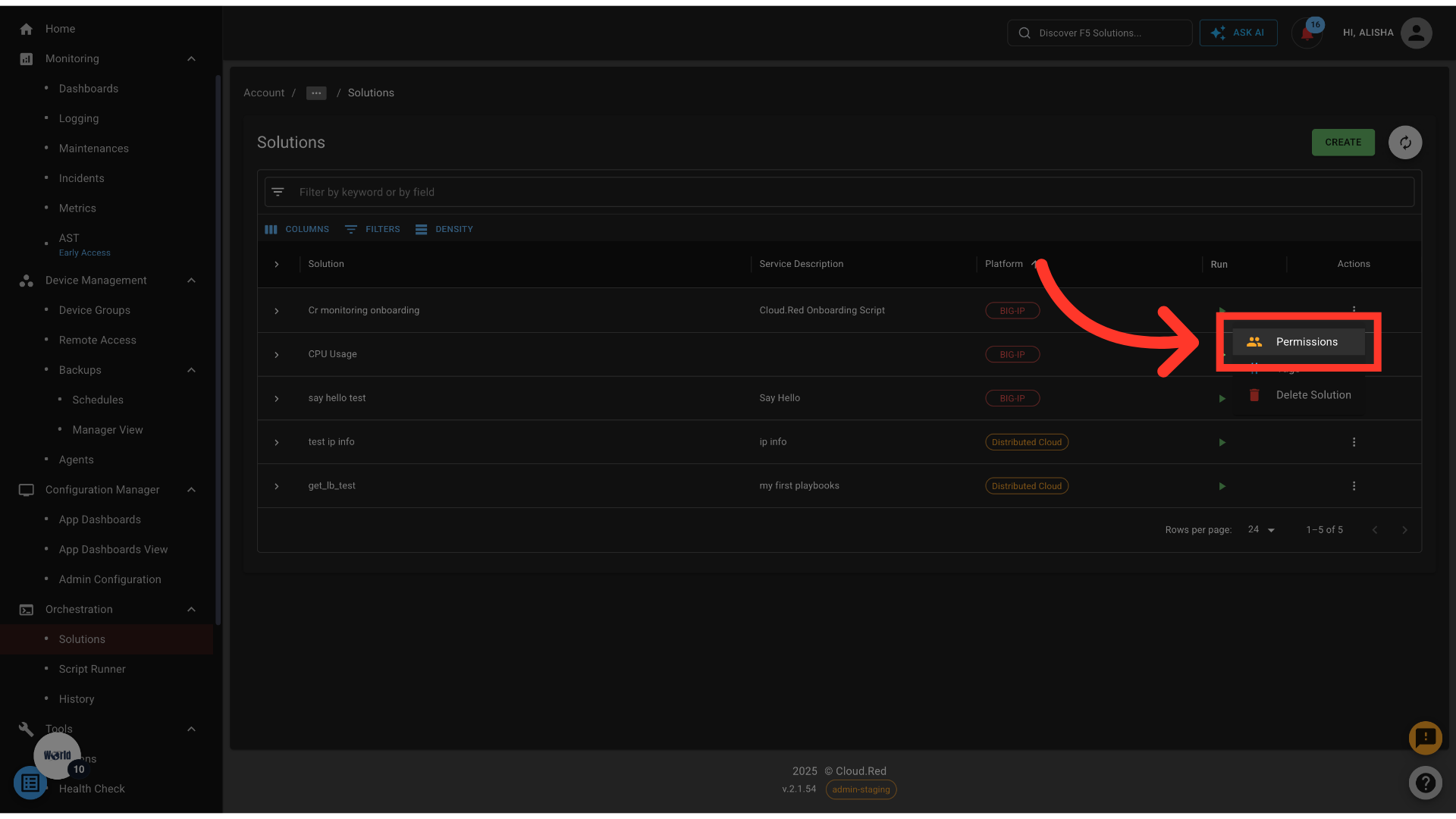
- Manage user permissions for execution
- Quickly perform actions such as execution, tagging, and deletion
📋 Solutions Table
Each created solution appears in a structured table with the following columns:🛠 Creating a Solution
Solutions can be created by admins only, from either a Script or an Ansible Service that has a form attached to it.- Identify if a script/service has a form attached to it. If not create a form to run the script/service.
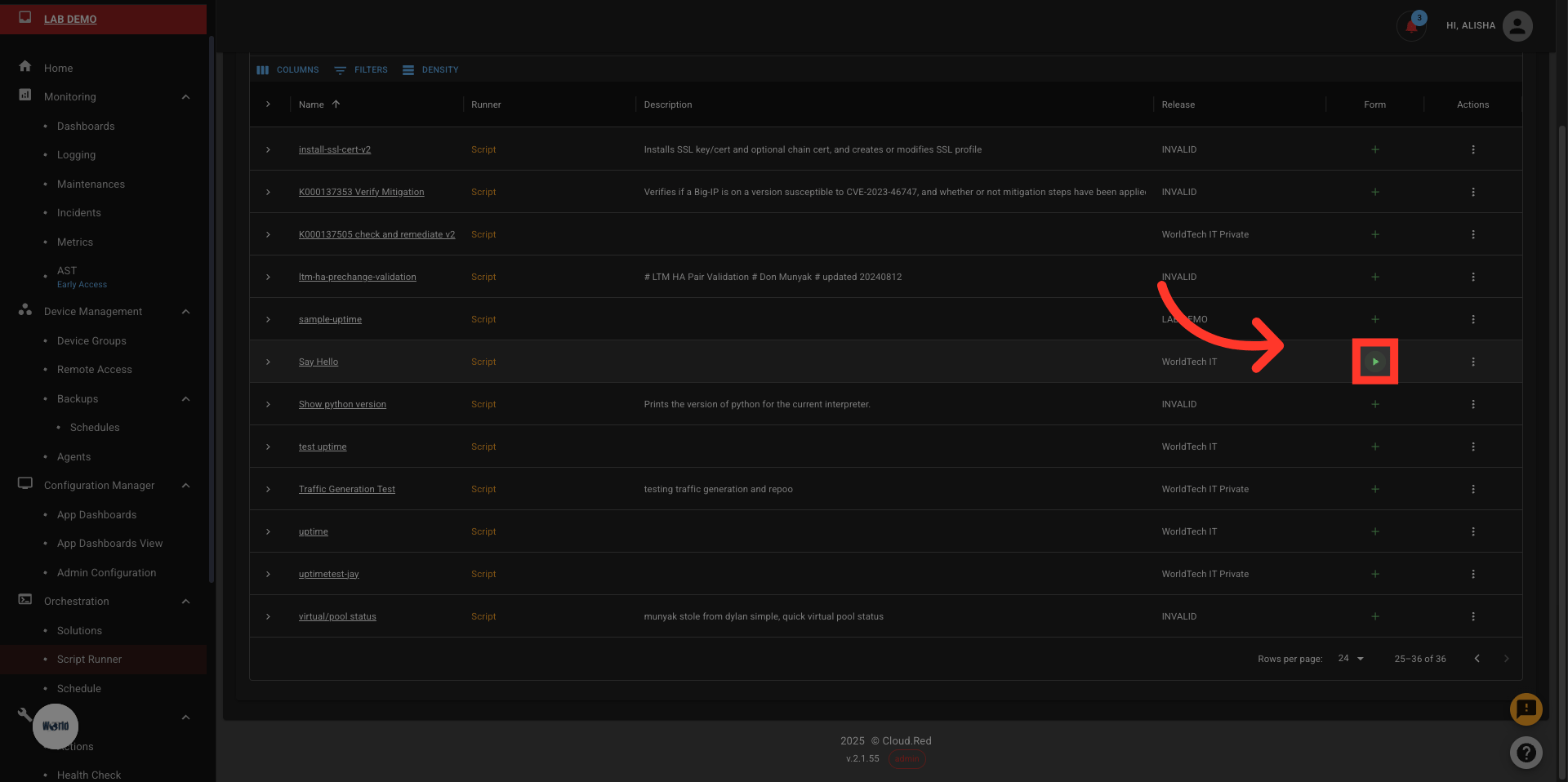
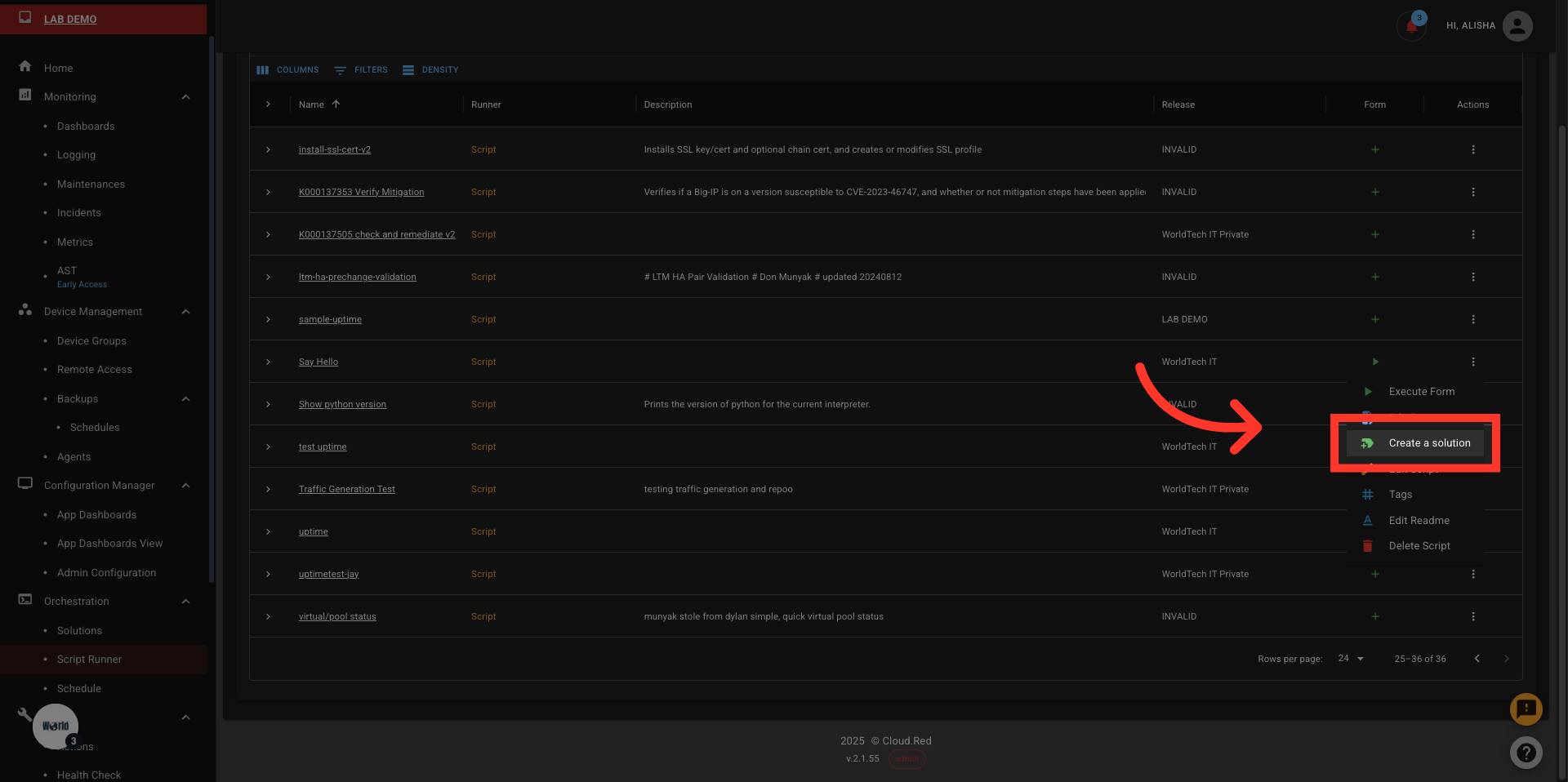
- Click the actions menu to get the Create a Solution option
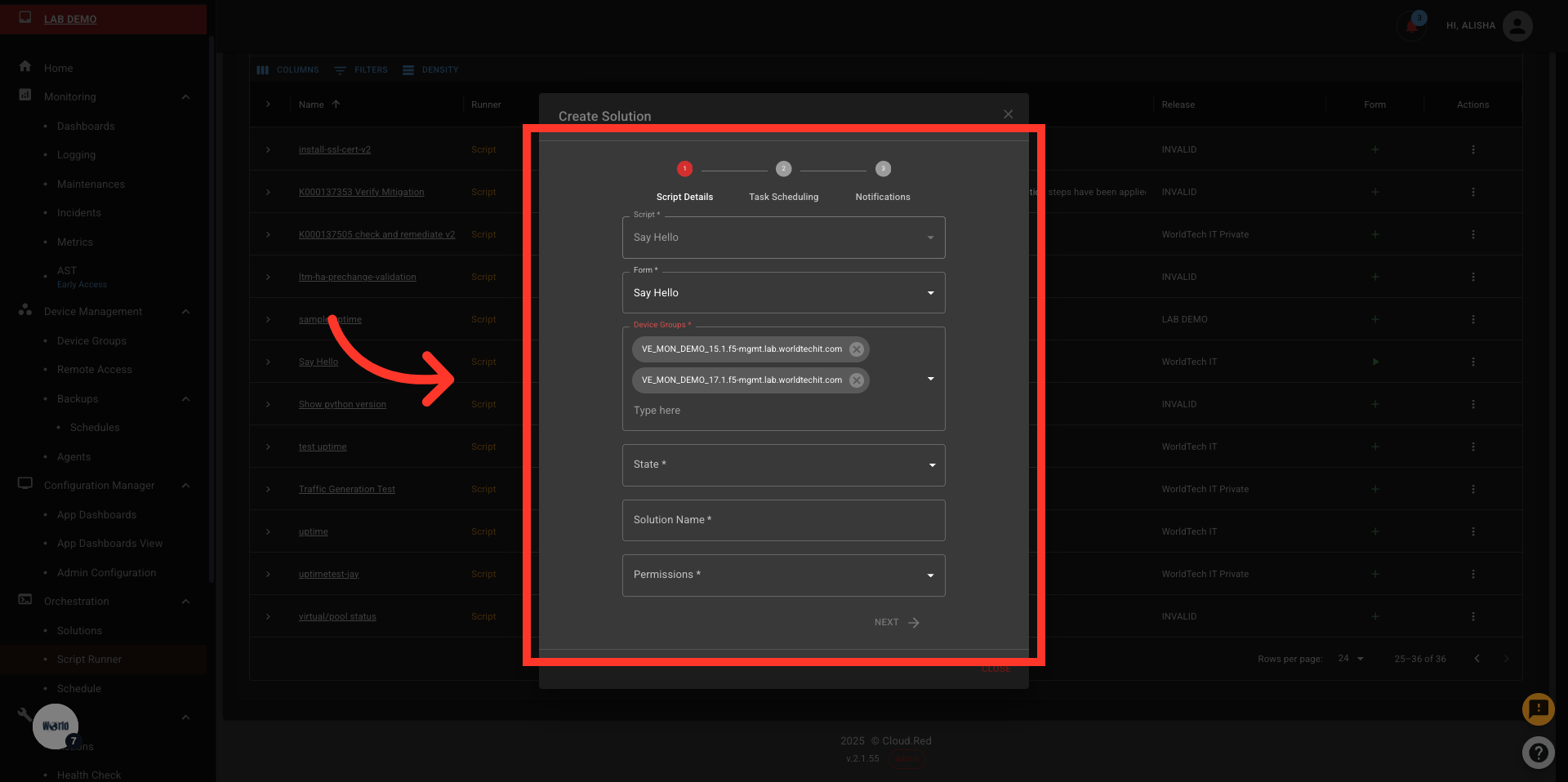
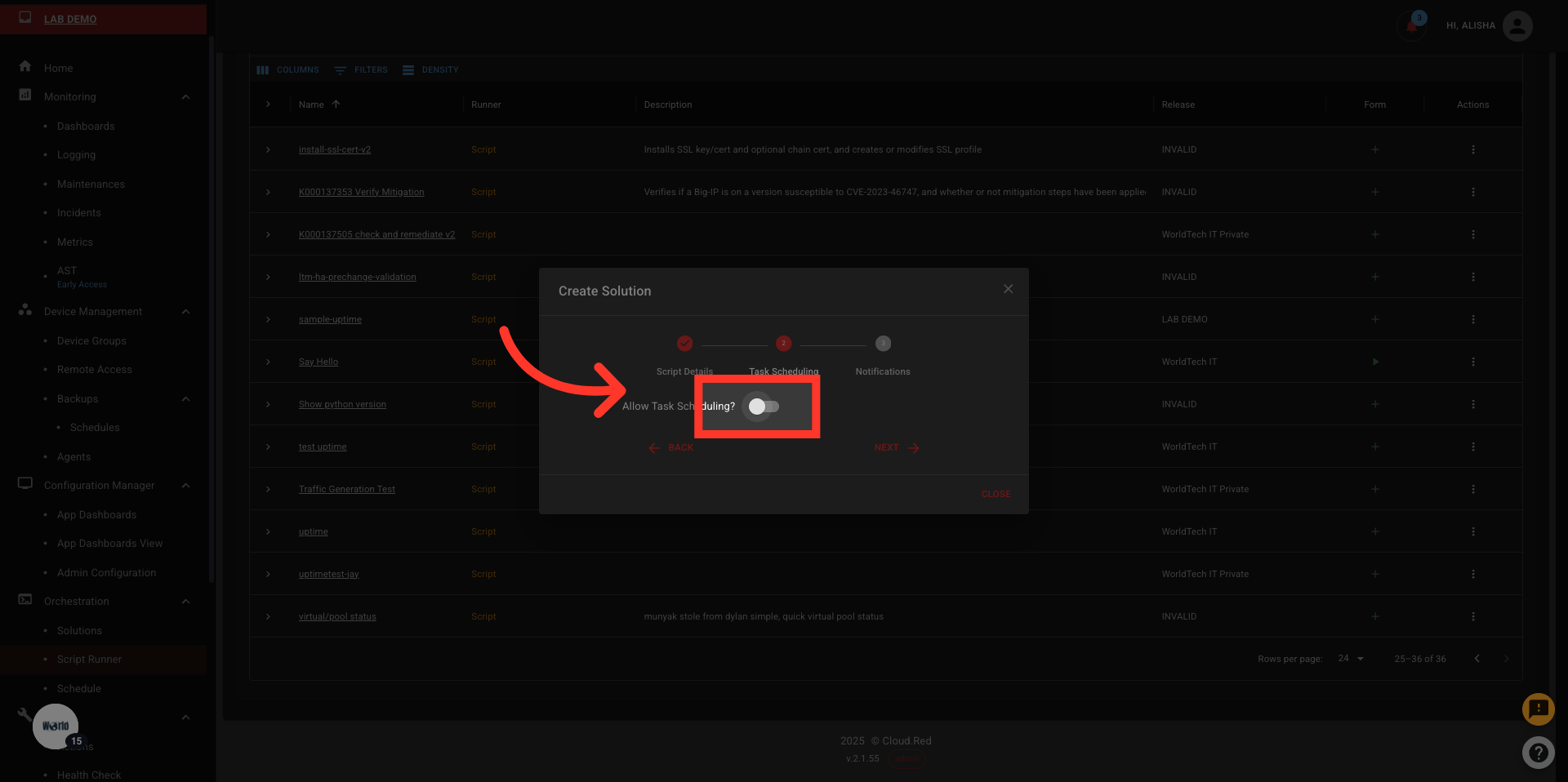
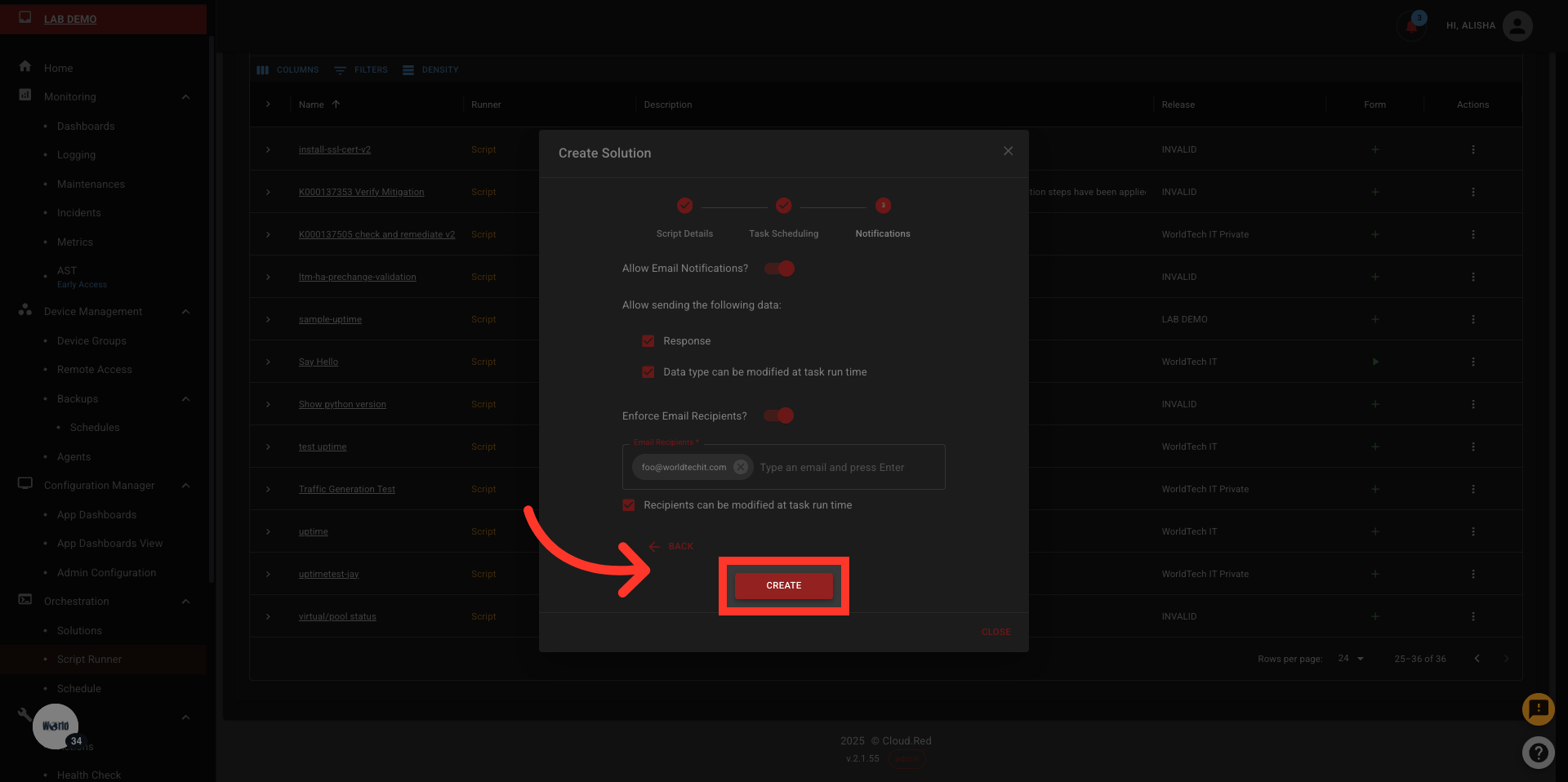
- Fill out the form in three steps and add necessary permissions.
🔒 Additional Permissions and Settings
When creating a solution, additional permissions and execution settings can be configured:- Allow Task Scheduling – enable scheduling of tasks for automated execution
- Supported scheduling windows:
- Daily
- Weekdays
- Last day of the month
- First weekday of the month
- Specific months
- Supported scheduling windows:
- Allow Email Notifications – enable sending notifications for task events
- Data Permissions – configure whether response data can be sent in notifications
- Restrict Email Recipients – define limitations on who can receive email notifications
🚀 Execute Solution
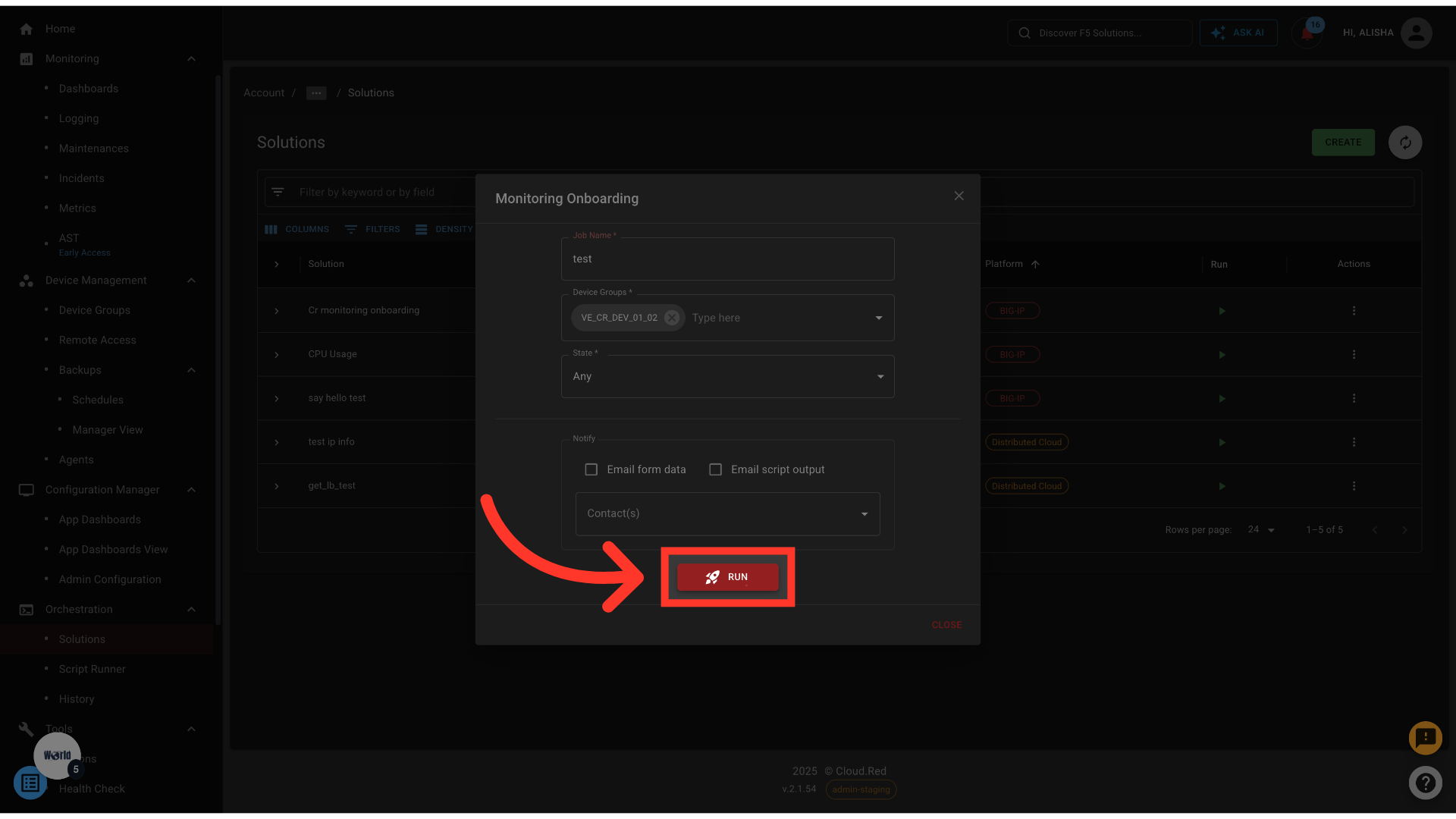
The execute icon allows the user to run the solution directly through the solution’s page.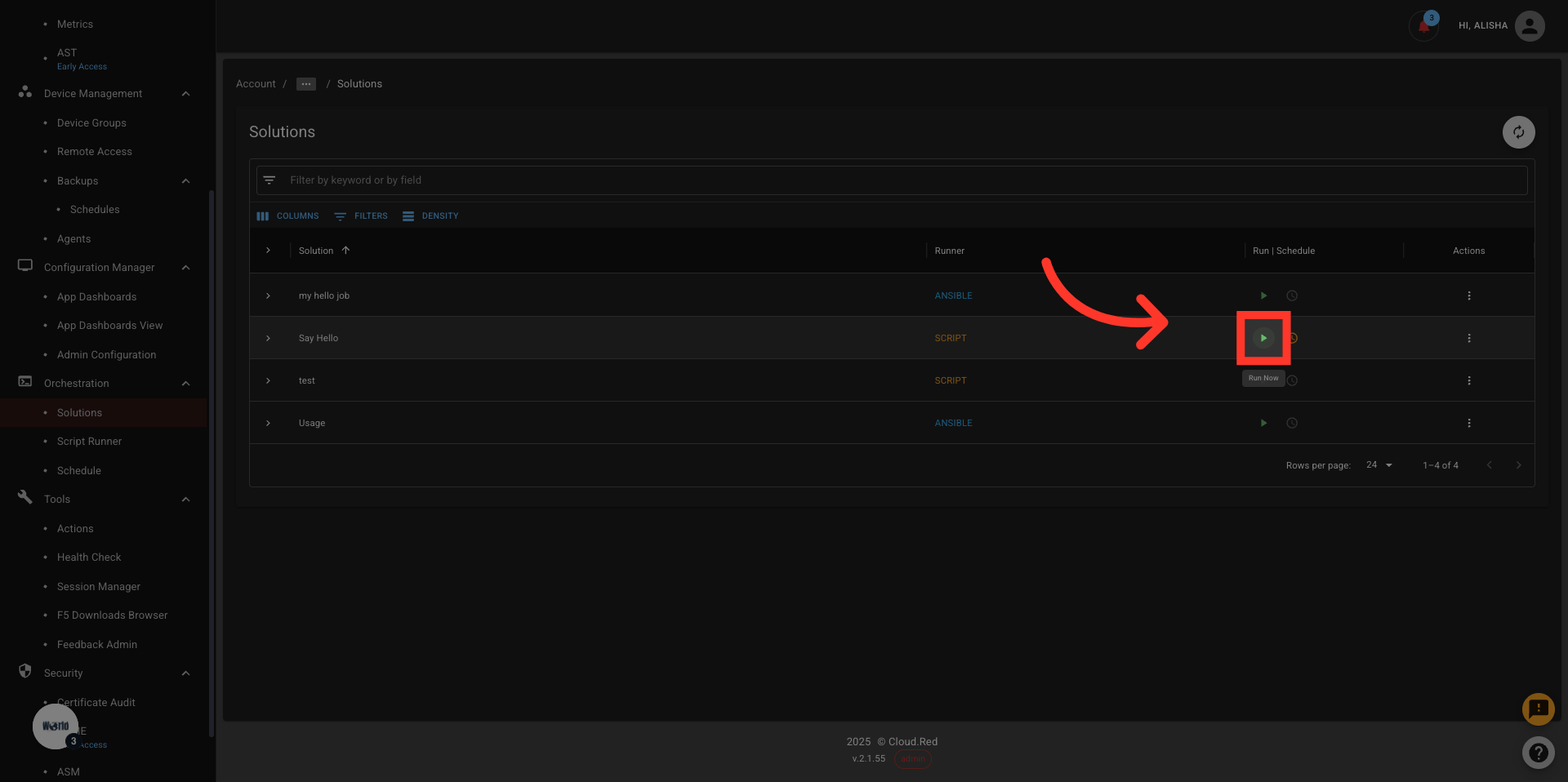
Why Use Solutions?
- Centralized Access: One place to run approved scripts and services
- Predefined Targets: Runs against preselected device groups
- Permission Control: Restrict execution to only authorized users without providing direct access to the devices.
- Streamlined Execution: No need to reconfigure script or service settings each time